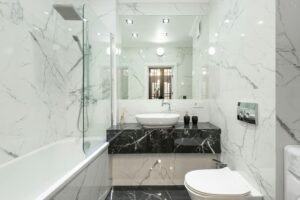
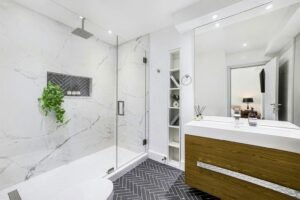
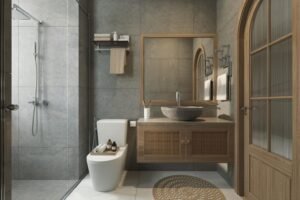
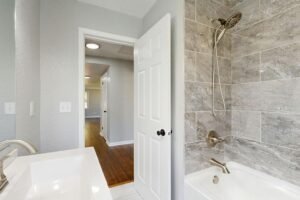
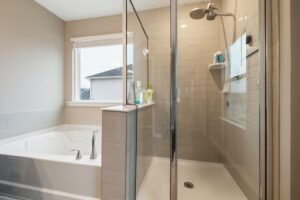
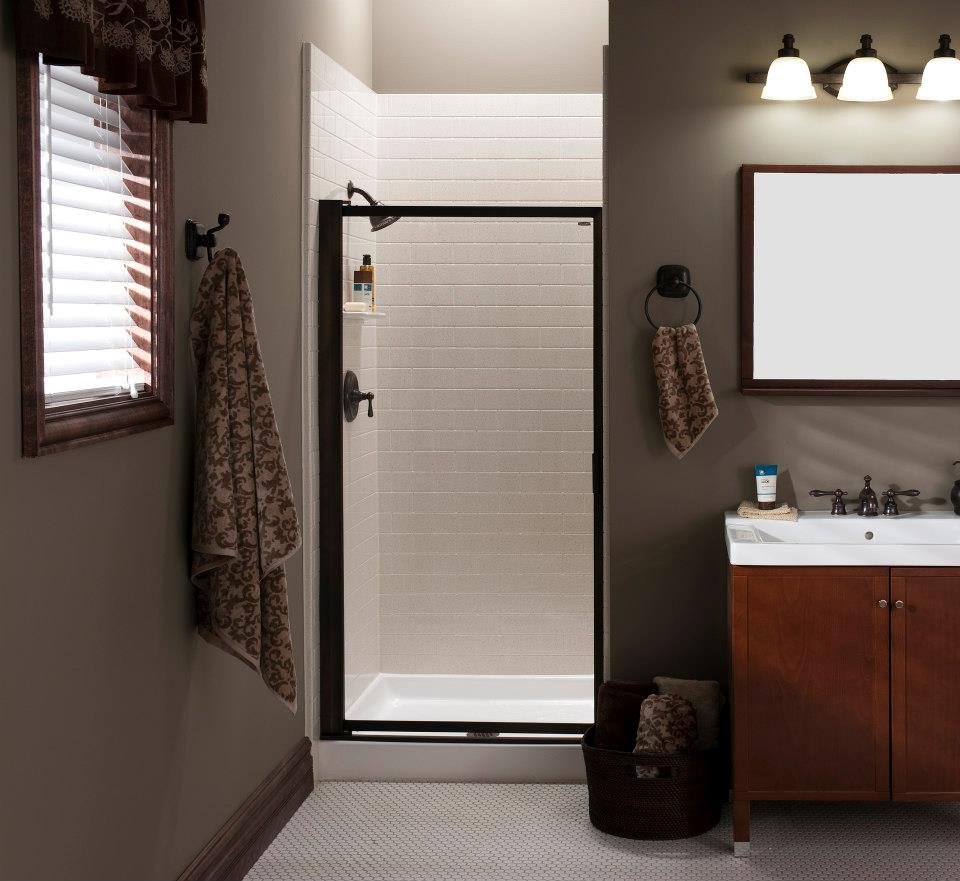
You don’t need to knock down walls to find more space.
Small bathrooms often feel cramped, not because of the actual square footage, but because of the visual obstacles in the room. The biggest culprit is usually the standard bathtub/shower combo. A tub cuts the room in half, creating a heavy visual barrier at knee height. If your goal is to declutter and open up your home, the bathroom is the best place to start.
Converting a cramped tub into a custom walk-in shower is the single most effective way to transform a small bathroom. It’s not just about luxury; it is about architectural sleight of hand. By manipulating sightlines, lighting, and layout, you can trick the eye into perceiving a much larger footprint.
The Magic of Sightlines
The perception of space is psychological. When you walk into a room, your brain calculates size based on how far the eye can travel before it hits a stop.
In a standard bathroom, a shower curtain or opaque textured glass door acts as a wall. It brings the room’s boundary forward by two or three feet. A custom walk-in shower—specifically one with clear glass doors or a frameless enclosure—removes that barrier entirely.
By replacing the tub with transparent glass, you extend the sightlines all the way to the back wall. Suddenly, the three feet of space previously hidden inside the tub area becomes visually part of the room again. The airiness of the glass makes the bathroom feel unified rather than segmented.
The Infinity Effect: Continuous Flooring
One of the most powerful design secrets for small bathrooms is blurring the lines between the “wet” and “dry” areas. Standard shower pans are often white acrylic, which creates a stark contrast against the bathroom floor tile. This contrast outlines the shower footprint, reminding you exactly how small the room is.
To maximize space, opt for a barrier-free base or a low-profile curb. Carry your main bathroom floor tile right into the shower. By using the same material continuously across the entire floor, you create an optical illusion of a seamless, expansive surface.
This “infinity effect” prevents the eye from registering the shower as a separate, confined box. It creates a cohesive flow that makes the floor plan feel significantly wider.
Vertical Efficiency: The Power of Recessed Niches
Clutter is the enemy of small spaces. In a compact bathroom, protruding shelves, hanging racks, and bulky corner caddies encroach on your elbow room and create visual “noise.”
A custom walk-in shower allows for recessed storage niches. These are built directly into the wall cavity between studs. Because they are flush with the wall, they don’t take up a single inch of shower space.
Functionally, this provides ample room for shampoos, soaps, and razors. Visually, it keeps the lines of the shower clean and uninterrupted. When designing your niche, consider running it vertically to draw the eye upward, emphasizing the height of the ceiling rather than the width of the walls.
Lighting: Bright, Airy, and Reflective
Dark corners shrink rooms. To make a small bathroom feel larger, you need to eliminate shadows. A standard tub enclosure is often the darkest part of the bathroom, but a glass walk-in shower changes the lighting dynamic completely.
Glass is reflective. When paired with bright, cool-toned LED lighting, the glass walls of your shower bounce light around the room, eliminating shadows and creating a sense of openness.
Consider installing a waterproof recessed light directly above the shower area. When this light hits the polished tile and clear glass, it highlights the depth of the room. For an added touch of height, install the showerhead higher on the wall or use a rainfall showerhead, which draws the eye up and emphasizes vertical space.
The “Custom” Advantage
Why go custom rather than buying a prefabricated kit? In small bathrooms, every inch counts. Prefabricated kits come in standard sizes that may not perfectly fit your specific alcove, often leaving “dead space” between the shower and the wall that must be filled with drywall.
A custom shower design allows you to utilize the entire available footprint. If your wall has an odd angle or a tight corner, a custom pan and glass enclosure can be cut to fit perfectly. You can maximize the internal elbow room without wasting space on fillers or bulky framing.
Furthermore, custom glass allows you to forgo the heavy metal frames found on builder-grade showers. Those metal frames act as visual cages; frameless glass creates a floating, ethereal look that is essential for making small spaces feel grand.
A Smart Investment
Beyond the immediate visual benefits, converting a tub to a walk-in shower is a sound financial investment. It modernizes the home, appeals to current design trends, and improves accessibility.
A spacious, airy walk-in shower feels like a spa retreat, turning a daily necessity into a moment of relaxation. By removing visual barriers and optimizing every square inch, you don’t just get a new shower; you get a whole new bathroom—without moving a single wall.
Key Takeaways
- Eliminate Visual Barriers: Replace tub curtains and textured doors with frameless glass. This extends sightlines to the back wall, instantly making the room look larger.
- Create Continuous Flow: Use the same floor tile inside and outside the shower (with a barrier-free base) to blur the boundary between “wet” and “dry” zones.
- Reduce Clutter: Install recessed wall niches to store toiletries inside the wall cavity, removing the need for bulky hanging caddies that encroach on elbow room.
- Maximize Light: Glass enclosures reflect light rather than blocking it. Pair this with bright LED lighting to eliminate dark corners and enhance the feeling of airiness.
- Go Custom: unlike standard kits, custom showers fit odd angles and tight corners perfectly, utilizing every square inch of available floor space without dead zones.