Is your bathtub collecting dust instead of bubbles?
For decades, the real estate “rulebook” was written in stone: You must have a bathtub in the master bathroom. Agents and builders warned that removing it would destroy your resale value. The fear was always the same: “If I remove the tub, I ruin the house.”
But as we settle into 2026, the housing market has shifted. The era of the “Just in Case” tub is over. Modern buyers value luxury, safety, and flow over outdated traditions. If you are considering a bathroom remodel this year, the tub-to-shower conversion is the smartest upgrade you can make.
1. The Reality: You Don’t Use Your Tub
Be honest: When was the last time you soaked for an hour?
For most homeowners, the master bathtub is a laundry basket holder or a place to wash the dog. Mostly, it is just an obstacle—a 20-inch high porcelain wall you have to step over every morning to take a quick shower.
In a standard bathroom, a bathtub eats up 15 to 20 square feet of floor space. By holding onto a fixture you rarely use, you sacrifice daily comfort for a hypothetical scenario. In 2026, the trend is the “Therapeutic Shower.” Homeowners are trading the occasional soak for a daily spa experience featuring rainfall heads, body sprays, and ample space to move.
2. The Resale Value Myth
The most common question homeowners ask is: “Will removing the tub hurt my home’s value?”
In 2026, the answer is no—provided you follow the “One Tub Rule.”
Real estate data suggests that while the Master Bathroom tub is falling out of favor, families still desire at least one bathtub in the house for children. As long as there is one tub in a guest or hallway bathroom, you are free to convert the Master Bath into a luxury shower-only space.
In fact, doing so often increases value. Today’s buyers (Baby Boomers and Millennials) prioritize:
- Accessibility: Boomers want “forever homes” without tripping hazards.
- Luxury: Millennials want the “hotel look” with glass enclosures and custom tile, rather than fiberglass tub inserts.
3. Safety First: The “Hurdle” Must Go
The bathroom is the most dangerous room in the house, and the bathtub sidewall is the primary culprit.
To enter a standard tub, you must balance on one foot, lift your leg 20 inches in the air, and plant it on a wet, curved surface. This “hurdle” motion destabilizes your center of gravity. Whether you are recovering from a sports injury, pregnant, or simply aging, this is an unnecessary daily risk.
The Walk-In Advantage:
- Low-Threshold Entry: Conversions use a base that is only 3-4 inches high, or completely flush with the floor, allowing you to walk in rather than climb.
- Non-Slip Tech: Modern shower bases feature advanced textures that provide grip even when soapy.
- Stability: Removing the tub allows for the installation of designer grab bars and built-in seating, future-proofing your home for aging in place.
4. 2026 Design Trends
Once the bulky tub is gone, you have a blank canvas to create a focal point. What does a modern conversion look like?
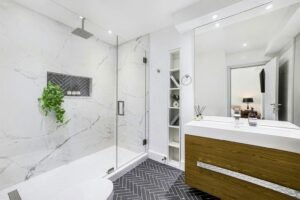
- Frameless Glass: The shower curtain is extinct. Heavy, tempered glass extends sightlines to the back wall, instantly making the bathroom feel twice as big.
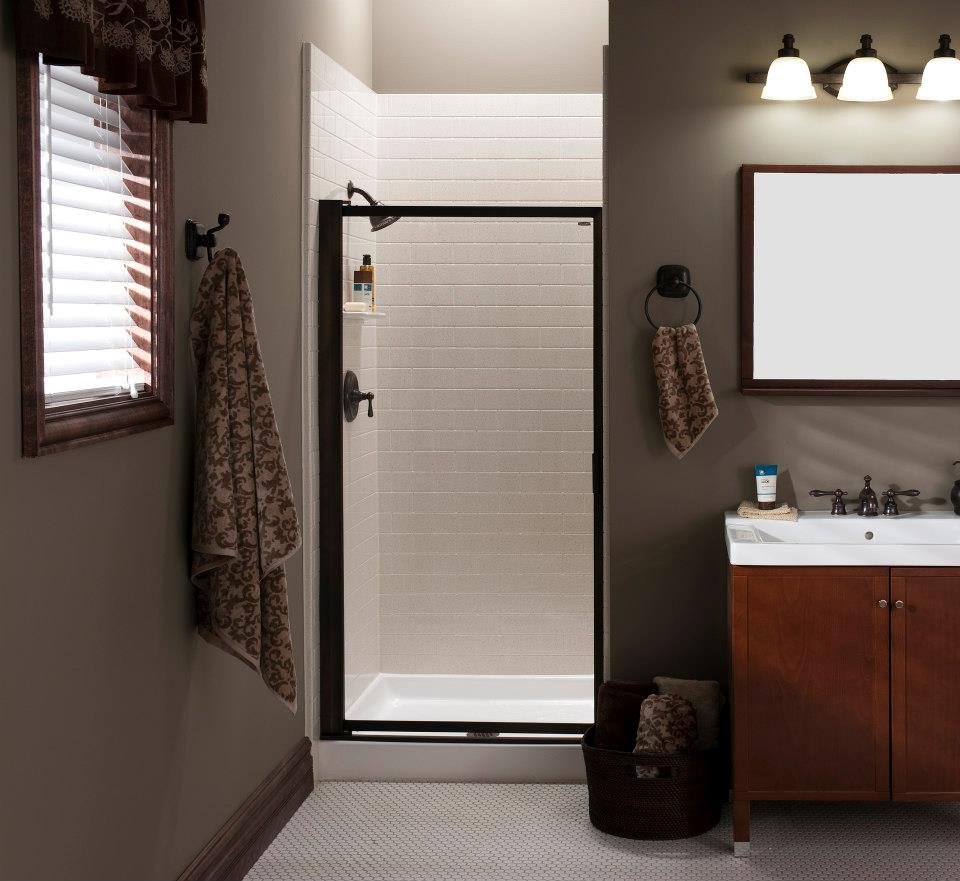
- Engineered Stone vs. Tile: While custom tile remains popular, 2026 has seen a surge in engineered stone and acrylic wall systems. These solid panels look like marble or granite but are grout-free, meaning no scrubbing and no mold.
- Functional Luxuries: Built-in recessed niches for shampoo (no more plastic caddies) and floating corner seats are now standard requirements for a high-end remodel.
5. The Installation: Faster Than You Think
A full bathroom gut-job can take weeks, but a tub-to-shower conversion is streamlined. Because you are working within the existing “wet area” footprint, the disruption is minimal.
The Process:
- Demolition: The old tub is removed, and walls are stripped to the studs to check for water damage.
- Plumbing: The drain is upgraded from 1.5 inches to 2 inches (code requirement for showers), and a new anti-scald mixing valve is installed.
- Waterproofing: A new shower base and waterproof wallboard create a sealed foundation.
- Finishing: Wall panels or tile are installed, followed by glass doors.
Timeframe: An engineered system can be installed in as little as 1 to 2 days, while custom tile typically takes 5 to 7 days.
The Bottom Line
If you haven’t taken a bath in over a year, a tub-to-shower conversion is a smart investment. It reclaims square footage, eliminates a major safety hazard, and modernizes your home’s appeal. Don’t design your home for a buyer ten years from now—design it for your life today.