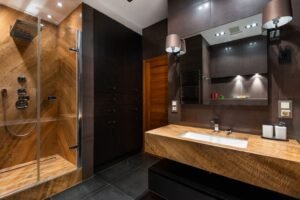
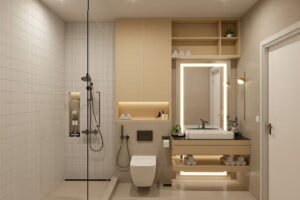
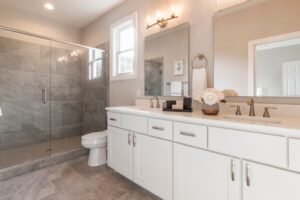
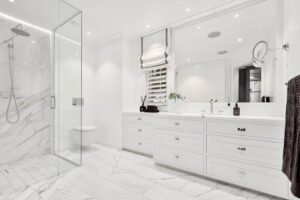
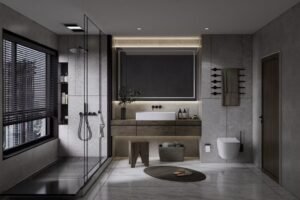
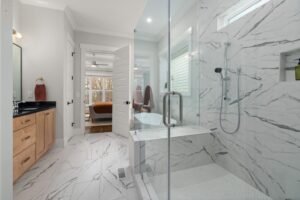
We are all familiar with the “open concept” in living spaces—tearing down walls between the kitchen and living room to create flow, light, and connection. Now, that architectural trend has officially migrated to the bathroom in the form of the barrier-free walk-in shower.
Also known as a zero-threshold or curbless shower, this design eliminates the traditional shower ledge entirely. The result is a bathroom floor that flows seamlessly into the shower drain without a step, a curb, or a visual break. It is a renovation choice that marries high-end style with intensely practical engineering.
Here is why the barrier-free shower is taking over modern bathroom design and why it might be the smartest investment you can make for your home.
1. The Aesthetic: A 5-Star Hotel in Your Home
The primary driver behind the curbless trend is visual impact. Traditional shower curbs, while functional, chop up the floor plan. They create a visual “stop” that makes a bathroom feel smaller and more compartmentalized.
By removing the threshold, you create an optical illusion of space.
- Seamless Continuity: You can run the same large-format tile from the vanity right into the shower. This makes even modest-sized bathrooms feel expansive and airy.
- Architectural Sleekness: It mimics the design language of luxury spas and 5-star hotel suites. Ideally paired with frameless glass panels (or no glass at all in a “wet room” setup), the look is intentional and minimalist.
- Showcase Elements: Without a bulky curb blocking the view, your shower tile, fixtures, and niche work become the focal point of the room.
2. Universal Design: Future-Proofing Your Home
While the aesthetic upgrade is undeniable, the hidden value of a barrier-free shower lies in Universal Design. This is the architectural concept that spaces should be accessible to everyone, regardless of age or mobility.
Aging in Place
“Aging in place” is a massive movement in real estate. Homeowners want to stay in their homes longer. A zero-threshold shower effectively “future-proofs” the bathroom.
- Wheelchair Accessibility: Without a curb, the shower is fully accessible for wheelchairs and walkers.
- Trip Hazard Elimination: The shower curb is one of the most common tripping hazards in the home. Removing it creates a safer environment for children, the elderly, or anyone recovering from an injury.
By installing a curbless shower now, you aren’t just renovating for style; you are ensuring your home remains functional for decades to come.
3. The Engineering: How It Works
Creating an open-concept shower isn’t as simple as just “not building a curb.” To ensure water drains correctly without flooding the rest of the bathroom, precise engineering is required.
The Structural Drop To achieve a level entry, the floor under the shower needs to be lower than the rest of the bathroom floor, allowing for a slope toward the drain.
- Recessing the Subfloor: Contractors often cut into the floor joists to lower the shower floor.
- Raising the Bathroom Floor: Alternatively, the rest of the bathroom floor can be raised to meet the shower height (though this creates a step into the bathroom itself).
The Slope and Drain The magic lies in the gradient. The floor must slope gently toward the drain at a precise angle—usually 1/4 inch per foot.
- Linear Drains: These are the gold standard for barrier-free showers. A linear (or trench) drain allows for a single-direction slope, meaning you can use large-format tiles without awkward cuts.
- Center Drains: These require a “bowl” slope (sloping from all sides), which necessitates using smaller mosaic tiles to accommodate the curve.
Waterproofing is King In a curbless setup, water containment is critical. Professional tanking (waterproofing) systems, such as Schluter-Kerdi or liquid membranes, must extend well outside the shower “zone” to ensure that any splashing water is contained and drained properly.
4. Managing the “Wet Room” Factor
A common concern with open-concept showers is: Does the whole bathroom get wet?
The answer is no—if designed correctly.
- Glass Partitioning: A fixed pane of frameless glass (splash guard) is usually installed to shield the vanity and toilet from direct spray.
- Shower Head Placement: Rain heads direct water straight down, reducing splash radius compared to angled wall-mounted heads.
- Heated Floors: Many homeowners pair curbless showers with radiant floor heating. This not only adds luxury but helps dry out any stray droplets on the floor rapidly, preventing mold and slipping.
5. Maintenance and ROI
From a cleaning perspective, the barrier-free shower is a winner. There are fewer nooks and crannies to scrub. No curb means no grout lines where the floor meets the wall to collect grime. If you utilize a linear drain and large tiles, grout lines are minimized even further.
Resale Value Real estate data suggests that accessible bathrooms are a significant selling point. You are widening your potential buyer pool to include multi-generational families and retirees. It is a renovation that offers both immediate lifestyle enjoyment and long-term financial gain.
Conclusion
The “open concept” bathroom is more than a fleeting trend; it is a shift toward smarter, safer, and more beautiful home design. By removing the barrier, you gain space, style, and peace of mind. Whether you are motivated by the sleek look of a spa retreat or the practicality of a forever home, the zero-threshold shower is the modern standard for bathroom renovation.